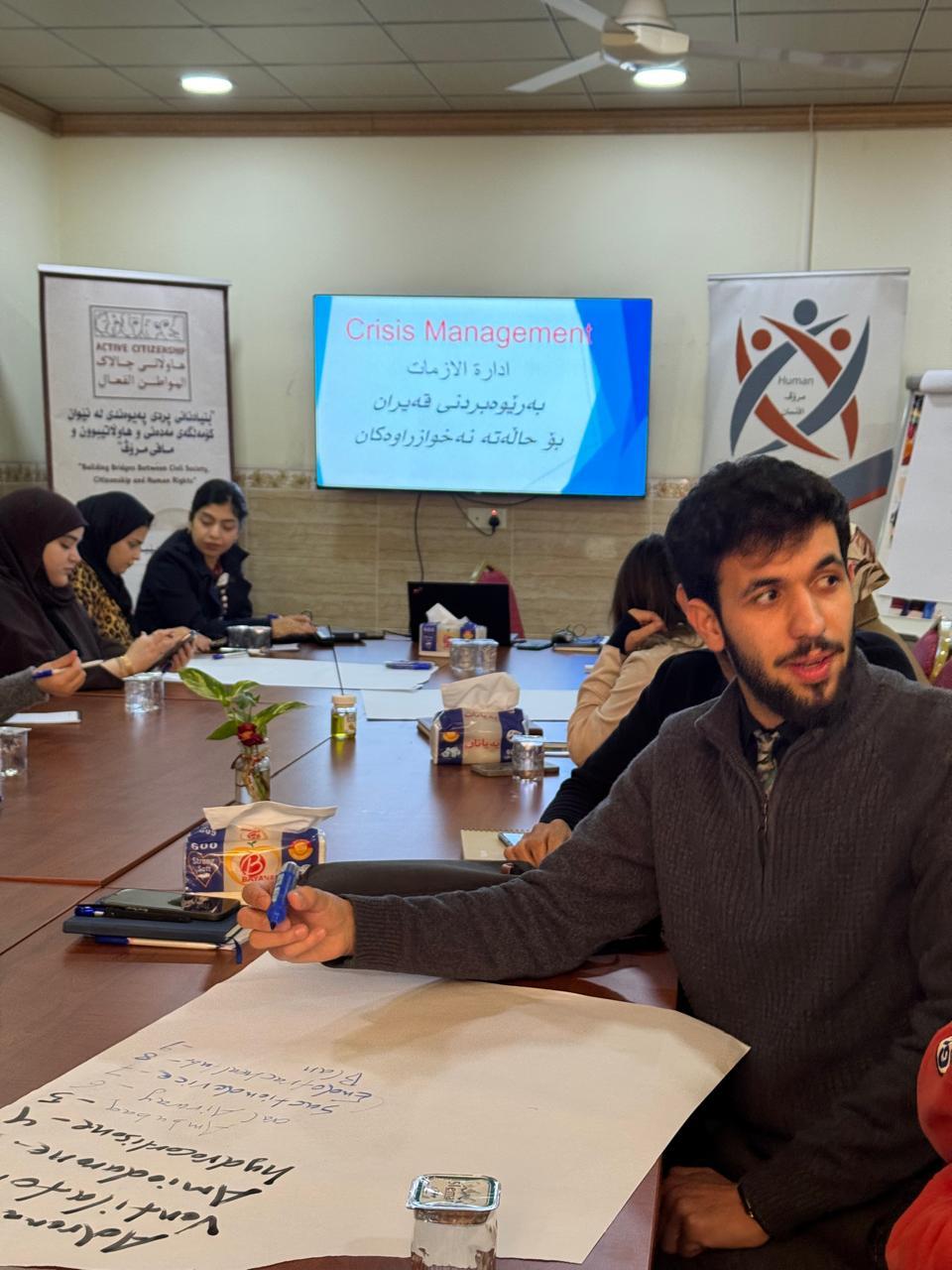
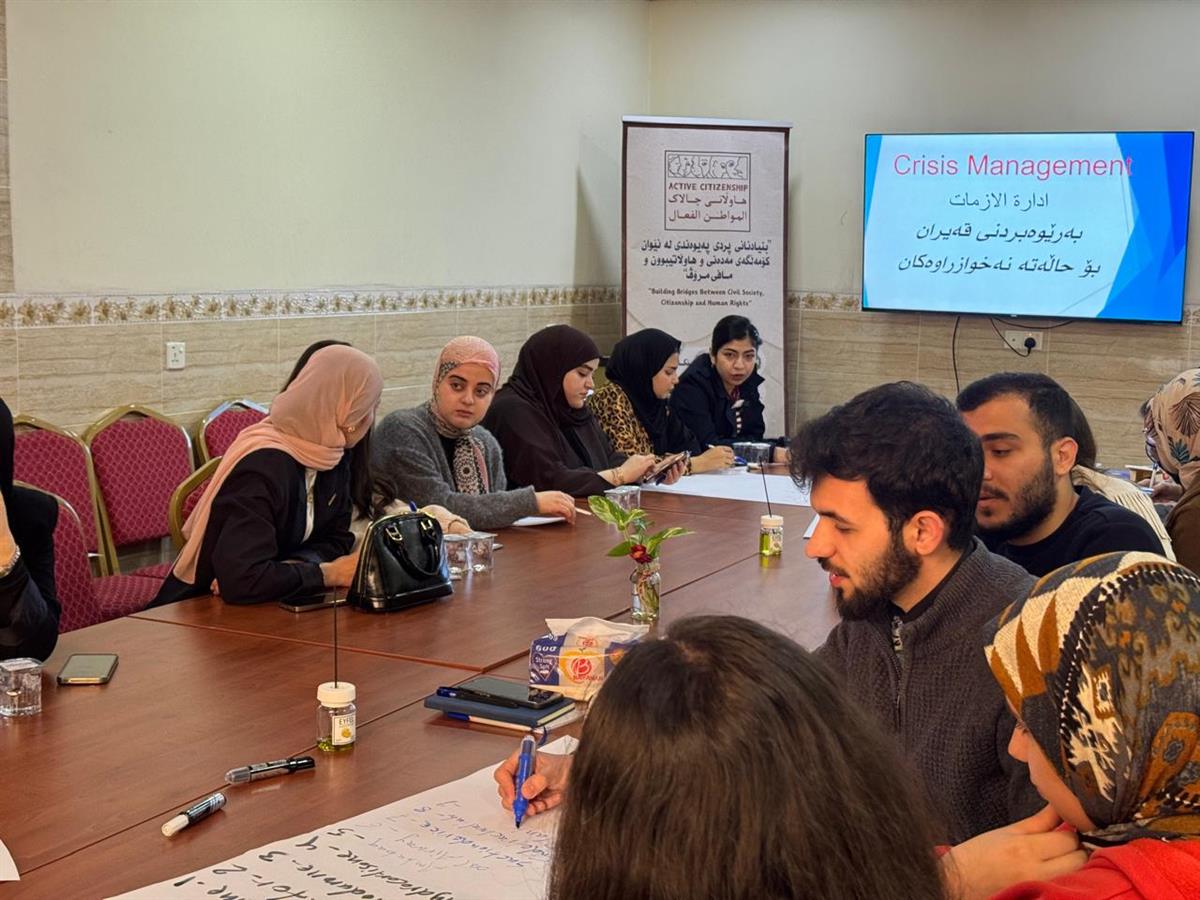
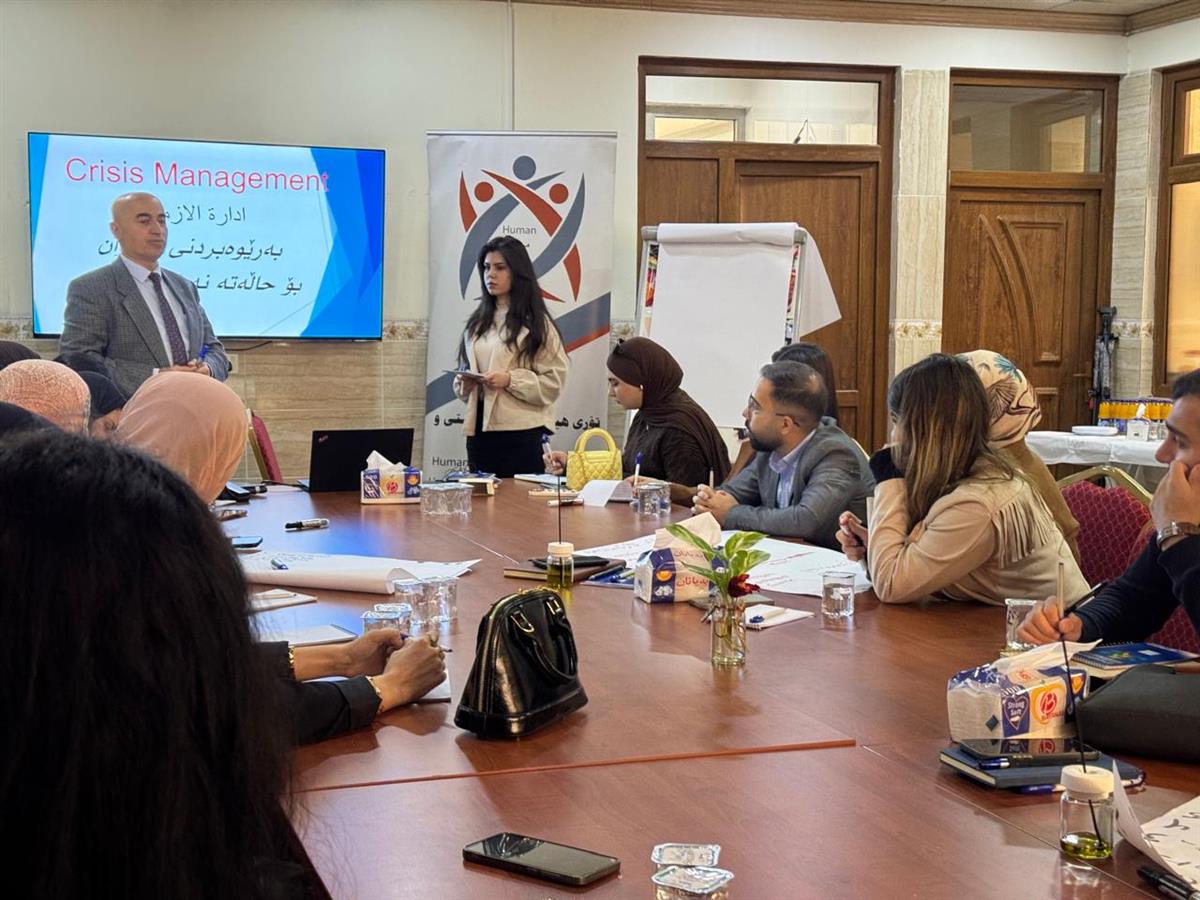
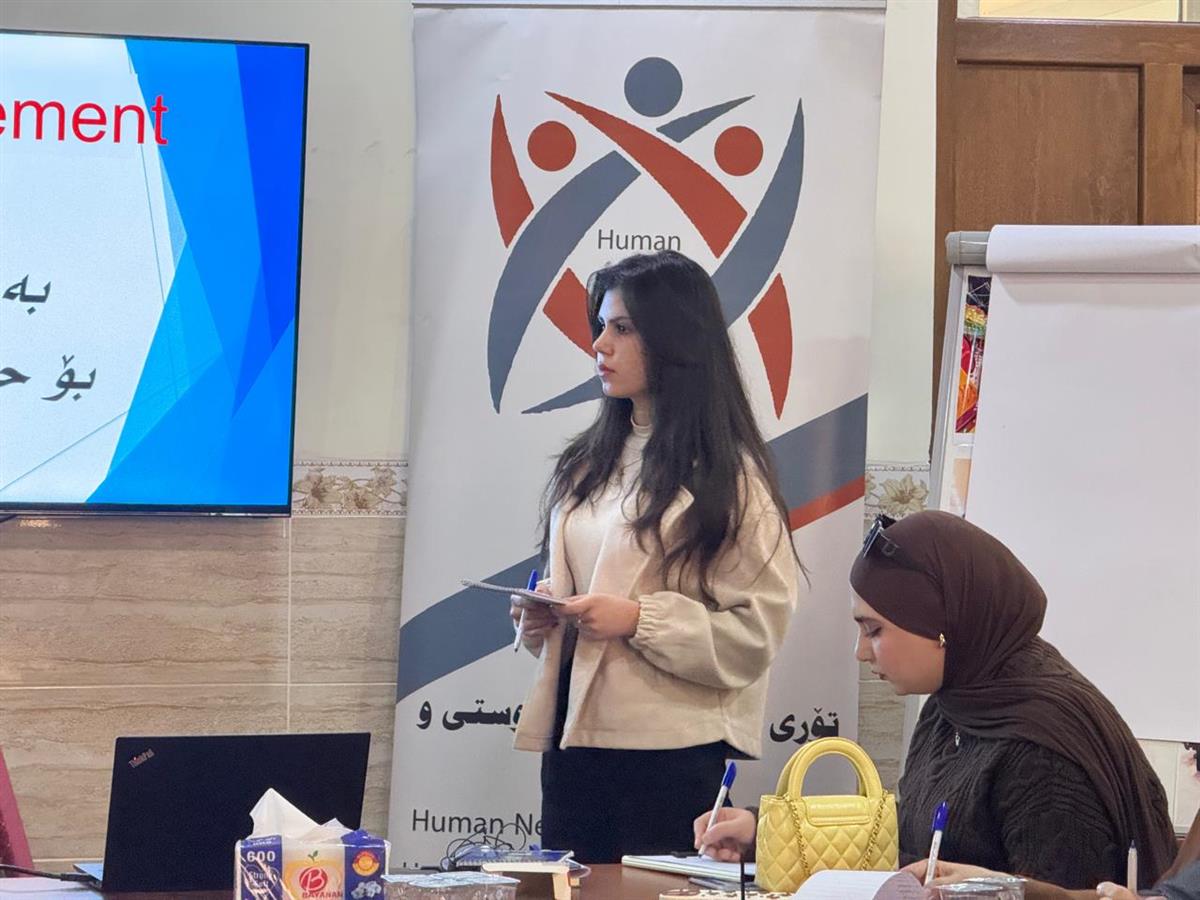
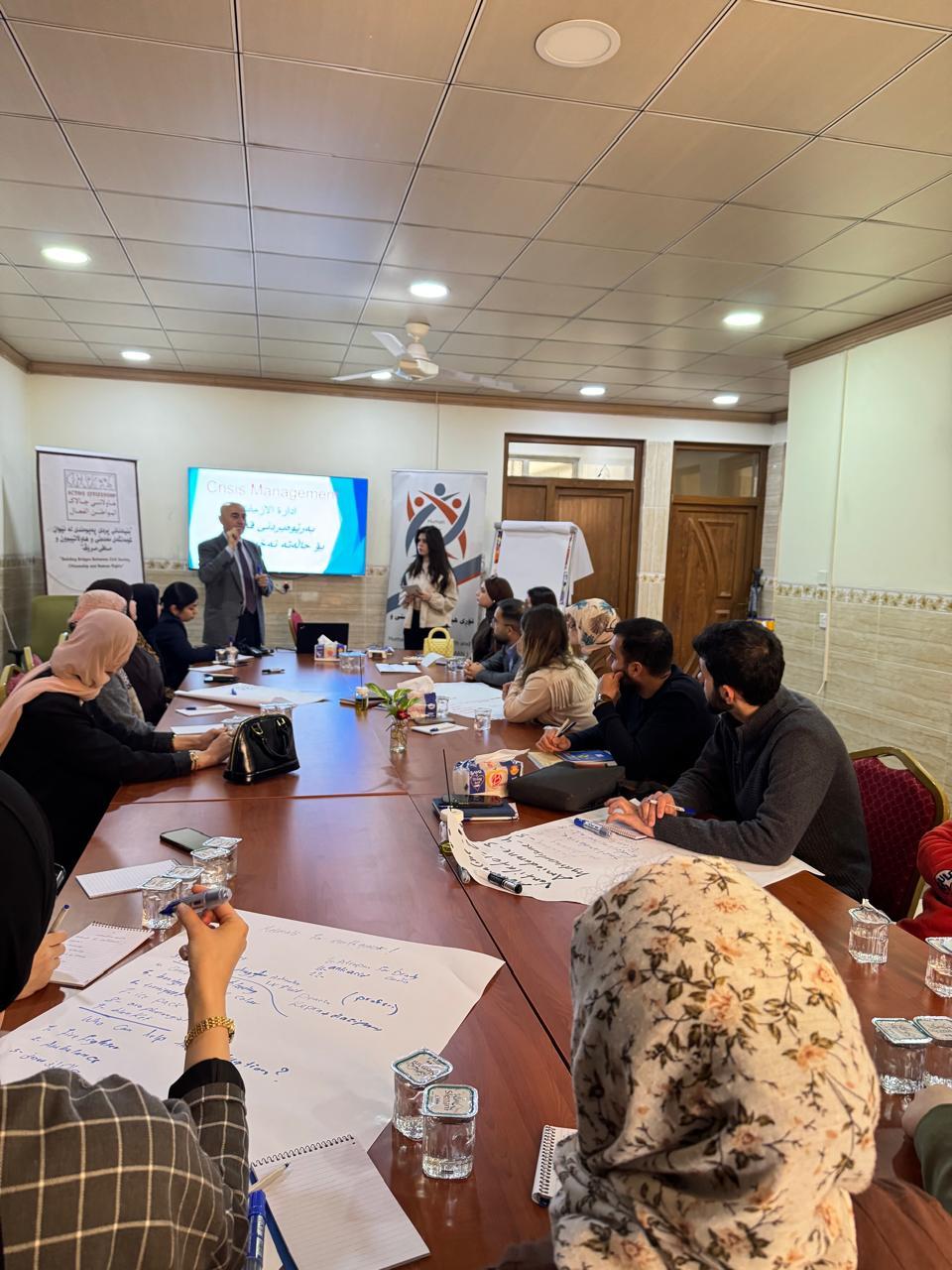
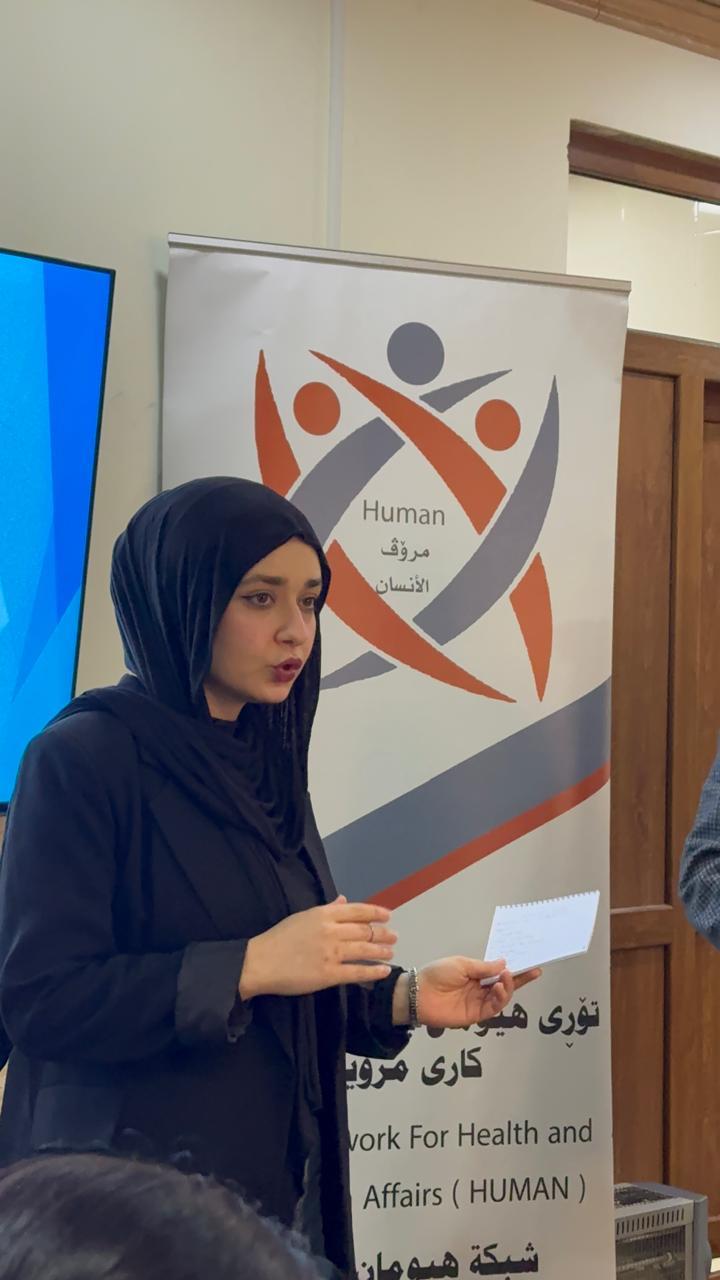
Training Course - Crisis and Disaster Management for Healthcare Staff
2026-04-07
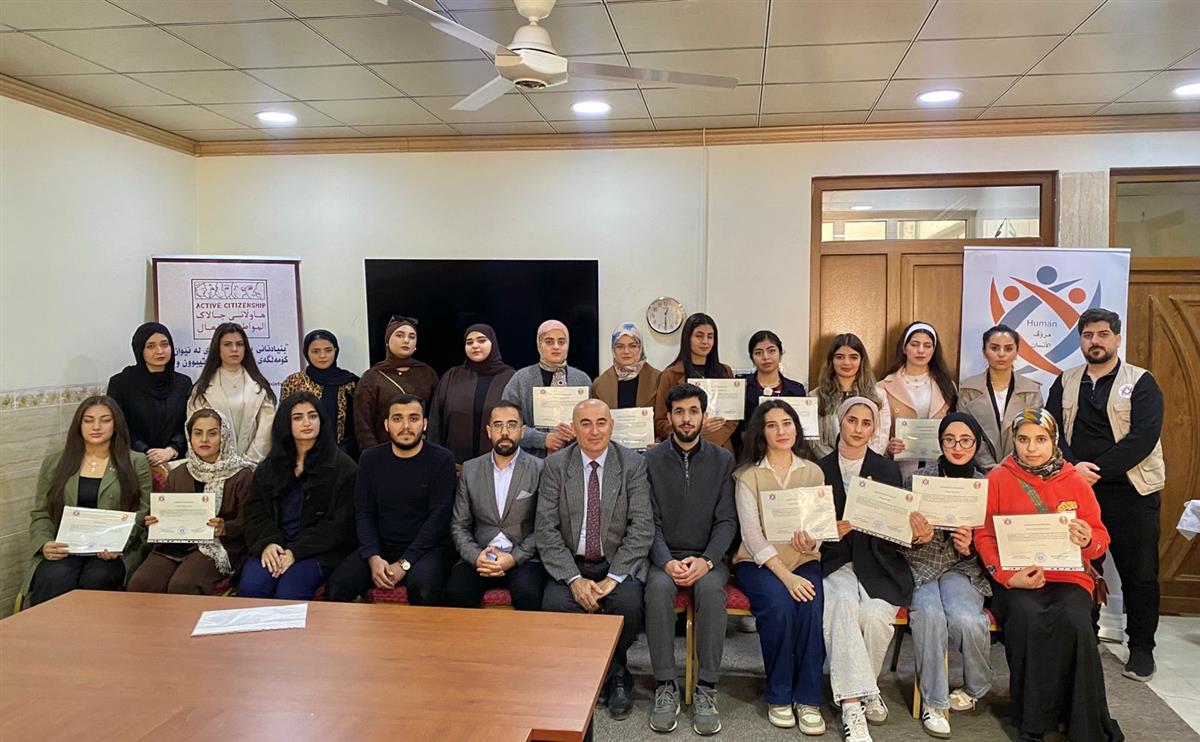
Training Course
Crisis and Disaster Management for Healthcare Staff
Organizing Body: Human Health and Humanitarian Work Network
Date of Implementation: April 4, 2026
Duration: Full-day training
Number of Participants: 25 healthcare staff
Venue: Network Headquarters-Sulaymaniyah
First: Introduction
As part of efforts to strengthen the capacity of healthcare personnel in effectively responding to emergencies and crises, the Human Health and Humanitarian Work Network organized a specialized training course entitled:
“Crisis and Disaster Management in the Health Sector.”
The training aimed to develop participants’ skills in dealing with various types of crises, including wars, floods, earthquakes, and the outbreak of epidemics, as well as other emergency situations.
Second: Objectives of the Training
The training aimed to:
Raise awareness among healthcare staff on the concept of crisis and disaster management.
Enhance skills in preparedness and pre-crisis planning.
Enable participants to respond promptly to different health emergencies.
Strengthen coordination and rapid response within emergency teams.
Train participants on effective decision-making under pressure.
Third: Training Topics
The training covered several key topics, including:
1. Concept of Crisis and Disaster Management
Definition and types of crises
Difference between a crisis and a disaster
Phases of crisis management (Prevention – Preparedness – Response – Recovery)
2. Types of Health Crises
Wars and armed conflicts
Floods and natural disasters
Earthquakes and seismic events
Outbreak of epidemics (such as Cholera, Influenza, COVID-19)
Other emergency situations
3. Preparedness and Planning
Developing emergency plans
Risk assessment
Health resource management
4. Emergency Response
First aid in emergency situations
Mass casualty management
Medical evacuation procedures
5. Coordination and Team Management
Teamwork during crises
Roles and responsibilities distribution
Coordination with relevant stakeholders
6. Psychological Support in Crises
Providing Psychological First Aid (PFA)
Managing trauma and psychological stress among affected individuals
Fourth: Training Methodology
The training adopted interactive approaches, including:
Theoretical lectures
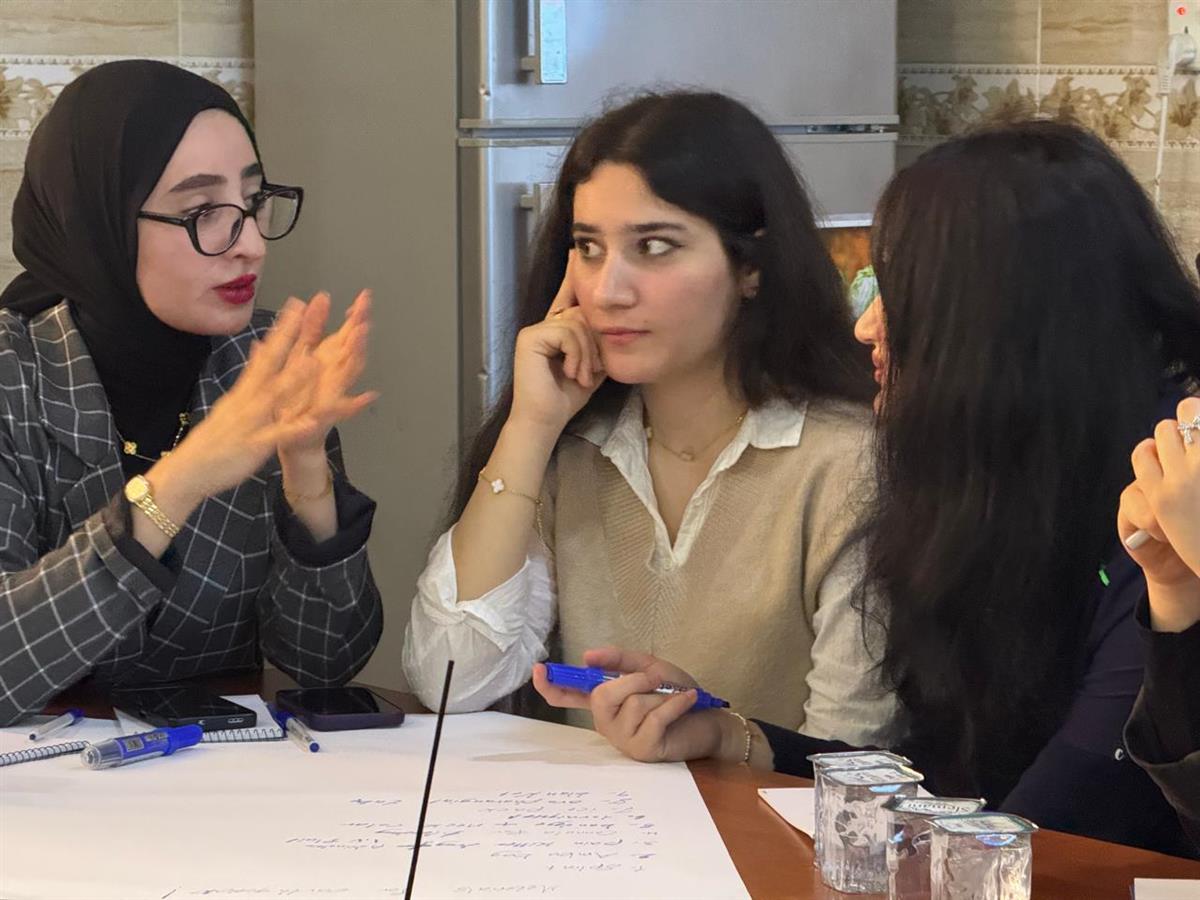
Group discussions
Practical exercises and simulation scenarios
Real-life case studies
Fifth: Target Group
The training targeted 25 healthcare professionals from various disciplines, aiming to enhance their readiness to operate in emergency and crisis situations.
Sixth: Training Outcomes
The training achieved several important outcomes, including:
Improved knowledge of crisis management among participants
Acquisition of practical skills in handling emergencies
Strengthened teamwork and coordination among healthcare staff
Increased preparedness for disaster response
Formation of permanent emergency response teams
Seventh: Recommendations
Organizing advanced and specialized training courses on a regular basis
Conducting regular field simulation exercises
Providing healthcare staff with necessary equipment and resources
Strengthening collaboration with governmental and humanitarian organizations
Integrating psychological support programs into emergency response plans
Ninth: Conclusion
This training comes as part of the Human Health and Humanitarian Work Network’s ongoing efforts to enhance the capacity of healthcare personnel and improve their readiness to respond to various crises and disasters, contributing to better humanitarian response and the protection of public health.